Truck collisions occur across Indiana every day, and Blackburn Romey has seen how fast-changing traffic patterns and heavy freight movement place drivers in vulnerable positions. Many of the most dangerous intersections for truck accidents in Indiana sit along routes used by commercial carriers traveling between major hubs, and these locations continue to produce severe injuries due to complex vehicle interactions. A clear understanding of how these intersections function helps injured motorists recognize where risks concentrate across the state.
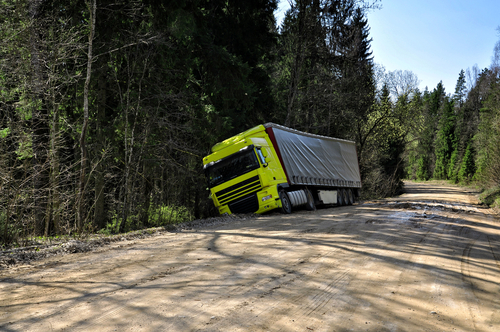
Indiana’s position as a national freight corridor means commercial vehicles move through rural towns and large metropolitan areas with slight variation in volume. High speeds on approaching roadways often compress the time truck operators have to slow, merge, or turn once an intersection appears ahead. Heavy trailers require long stopping distances, so any abrupt movement by cross-traffic or a turning passenger vehicle creates conditions ripe for a collision.
Large distribution centers surrounding Indianapolis, Fort Wayne, South Bend, Lafayette, Merrillville, and Terre Haute push steady truck volume toward key crossroads. These areas combine fast-moving vehicles, frequent lane changes, and short signal cycles, which increase the likelihood of errors by truck drivers and nearby motorists. Many intersections also connect to statewide highways, so trucks frequently enter these spaces while carrying significant momentum.
Blind spots extend along both sides of tractor-trailers, often hiding small vehicles during left turns or lane transitions. A semi-truck’s wide turning arc reduces room for other motorists and often places trailers across multiple lanes. Heavy loads lengthen braking distance and limit maneuverability, so any misjudged gap or unpredictable movement amplifies crash severity.
Intersection design contributes to these hazards. The Federal Highway Administration identifies unsignalized intersections as the most common type in the United States, including stop sign-controlled, yield sign-controlled, and uncontrolled junctions typically found on low-volume rural or residential roads. These configurations increase crash severity when trucks enter or cross without traffic signals or controlled timing. When large commercial vehicles meet fast cross-traffic at such locations, both operators face narrow margins for error.
Crash patterns across the state highlight intersections where freight density, roadway design, and traffic movement converge. The most dangerous intersections for truck accidents in Indiana often appear where high-speed travel transitions into crowded crossing points or where distribution-related traffic never tapers.
The intersection of US 31 and State Road 10 has established a reputation for frequent truck collisions due to a steady mix of rural drivers and commercial carriers moving through the corridor. Intersections at 38th and Six Points, and 236th and Six Points, experience persistent problems due to heavy traffic volume and limited maneuvering space. These locations introduce trucks into environments where rapid stops, immediate turns, and unpredictable flow produce a high crash rate.
Trucks navigating connections along I-69, I-70, U.S. 30, and I-80 confront hazards shaped by constant freight demand. These corridors handle substantial commercial movement, so approaching intersections often present sudden stopping conditions, tight merges, or rapid lane changes. When a truck shifts from expressway speed into an intersection with short reaction times, crash likelihood increases. These patterns reflect findings often noted in roadway safety discussions concerning routes that carry sustained heavy-truck mileage across Indiana.
Data from the Indiana Criminal Justice Institute explains how intersection crashes involve multiple junction types, including T-intersections, Y-intersections, four-way intersections, interchanges, traffic circles, ramps, and complex five-point designs, each within a defined roadway boundary.
Cities across Indiana face unique challenges as trucks share compact spaces with continuous commuter flow. Indianapolis manages a high concentration of commercial vehicles near industrial districts, where intersections along Washington Street, Raymond Street, and Madison Avenue see steady freight traffic. Fort Wayne’s major routes, including Coliseum Boulevard, Lima Road, and Coldwater Road, also demand constant attention from truck drivers navigating dense urban movement.
Urban intersections often include pedestrian crossings, tight turn pockets, and rapid light changes. Trailers swinging through left turns or wide right turns frequently encroach into adjacent lanes, exposing nearby motorists to danger. Heavy traffic, reduced visibility, and constant lane shifts create conditions that foster multi-vehicle collisions involving commercial trucks.
Contact a Car Accident Lawyer Near You
The causes behind intersection-related truck crashes emerge from predictable patterns, many tied to vehicle size, roadway design, or human error. Left-turn conflicts dominate many severe collisions, especially when trailers swing widely through crowded lanes. Crossing movements at rural intersections often involve drivers who misjudge a truck’s speed or distance. When a smaller vehicle enters a junction prematurely, a truck operator rarely has enough time or space to react.
Speed plays a consistent role. Trucks entering intersections from high-speed segments frequently encounter stopped vehicles or turning motorists with limited time to adjust. Sudden braking while carrying a heavy load increases rear-end crash severity and can push a truck into adjacent lanes.
Blind spots hide passenger vehicles when trucks accelerate, brake, or initiate turns. These unseen areas contribute to angle collisions and sideswipes, especially in multi-lane intersections where smaller vehicles weave around commercial traffic. Distracted driving, fatigue, inexperienced operators, poor maintenance practices, and shifting cargo loads add layers of risk that compound upon the already challenging nature of intersection travel.
Indiana’s mixed infrastructure, which includes rural two-lane roads, high-speed divided highways, and urban commercial corridors, places trucks in environments where quick adjustments become difficult. These conditions continue to shape the most dangerous intersections for truck accidents in Indiana, revealing how structural design and heavy freight activity combine to create predictable but preventable crash patterns.
Truck collisions often leave injured individuals facing significant medical expenses and complex insurance challenges. Many injured motorists also struggle with lingering pain and stiffness after these collisions, raising questions about how long should you be sore after a car accident and when medical evaluation becomes critical.
An experienced legal team can secure traffic engineering data, analyze intersection design, preserve commercial carrier evidence, and identify all responsible parties. Blackburn Romey handles truck accident cases across the state and understands how intersection-related crashes unfold at the most dangerous intersections for truck accidents in Indiana. Anyone injured in a collision involving a commercial vehicle can contact our office at 260-422-4400 to speak with a lawyer who understands Indiana’s freight network and the steps required to pursue a successful claim.
Blackburn Romey founding partner Tom Blackburn graduated with honors receiving a degree from Indiana University at the Robert H. McKinney School of Law. Initiating his legal career in 1977, he has been active in practicing law and currently serves as a member of the Indiana State Bar Association on the Ethics and Advertising Committees, the American Bar Association, the American Association for Justice, as a board member at the Indiana Trial Lawyers Association, and as an appointed member of the Executive Committee for the State of Indiana for the National Trial Lawyers Association.

This page has been written, edited, and reviewed by a team of legal writers following our comprehensive editorial guidelines. This page was approved by Founding Partner, Tom Blackburn, who has more than 47 years of legal experience, including over 39 years specializing as a personal injury attorney.

