When a serious car accident disrupts daily life in Evansville, the consequences often extend far beyond the collision itself. Medical treatment begins immediately, work schedules shift without warning, and insurance representatives move quickly to gather information before the full extent of an injury becomes clear. Drivers traveling along the Lloyd Expressway, I-69, or neighborhood corridors near Green River Road quickly discover that the physical impact represents only part of a broader challenge involving fault determinations, insurance negotiations, and future medical and income concerns. During this uncertain period, clear legal guidance and early preservation of evidence make a meaningful difference in how a claim develops.
As an Evansville car accident lawyer team serving individuals and families throughout Vanderburgh County, we focus on protecting critical documentation, addressing insurance tactics directly, and building claims grounded in Indiana negligence law from the outset. At Blackburn Romey, we recognize how disorienting this process can feel, and we approach every car accident case with careful preparation, steady guidance, and a commitment to helping injured clients regain stability with confidence rather than confusion.
After a collision, many injured drivers initially assume insurance companies will fairly evaluate the claim and offer appropriate compensation once medical records and repair estimates arrive, yet experience shows a different reality in most serious car accident cases. An Evansville car accident lawyer provides structure and protection during a period when insurance companies evaluate claims using internal risk models that may not fully reflect the full scope of harm.
Early representation allows legal counsel to gather evidence before it disappears, coordinate medical documentation, and prevent missteps that could weaken a claim. Car accident cases rarely revolve around a single document or statement, because liability analysis, medical causation, and damage valuation require organized proof presented in a coherent narrative that aligns with Indiana negligence standards.
Table of Contents
Without experienced guidance, injured drivers often face pressure to accept early settlement offers that overlook future care needs or long-term wage losses, and those decisions can carry lasting consequences. Beyond the immediate pressure of settlement discussions, modern car accident claims often involve layers of complexity that injured drivers rarely anticipate at the outset.
Recognizing these issues early helps prevent avoidable setbacks during the claims process, which often surface in ways that injured drivers do not expect, including:
By coordinating medical documentation, reviewing coverage layers, and preparing for litigation from the outset, our legal team helps prevent early missteps that could limit long-term financial recovery.
Because Indiana personal injury law requires proof that another driver breached a duty of care and caused measurable harm, every successful car accident case depends on evidence that clearly establishes fault and damages. Our legal team builds claims through thorough investigation and documentation, including:
Early involvement allows our firm to send preservation letters, secure electronic data, and prevent evidence from fading or being overwritten. When our legal team coordinates these actions promptly, the claim rests on corroborated proof rather than speculation, which strengthens negotiation leverage and positions the case for litigation if necessary.
Across Evansville’s highways, commercial corridors, and residential streets, collisions often stem from preventable driving behaviors rather than unavoidable circumstances. According to the Indiana Criminal Justice Institute’s Indiana Crash Facts 2024 Report, hit-and-run collisions accounted for 13 percent of all crashes in 2024, while speed-related crashes represented 8 percent, and distracted driving, traffic signal violations, aggressive driving, and alcohol-impaired crashes each comprised 5 percent or fewer.
Although these statistics reflect statewide data, the patterns closely resemble incidents occurring in Evansville, particularly at heavily traveled intersections and along primary commuter routes. Many of these crashes arise from conduct that reflects a failure to exercise reasonable care under traffic conditions, including:
In Evansville, these behaviors frequently intersect with roadway and environmental conditions that increase collision severity. Congestion along the Lloyd Expressway and I-69 produces sudden slowdowns that lead to rear-end crashes when drivers fail to maintain safe following distances. Freight and delivery traffic adds density near commercial corridors, and weather conditions such as rain, fog, or winter ice reduce traction and visibility, extending stopping distances and narrowing reaction margins. Construction zones and temporary lane shifts may further compound driver error when inattentive motorists fail to adjust to changing traffic patterns.
When these combined factors are examined together, liability analysis becomes clearer because the relationship between negligent conduct and roadway conditions helps demonstrate how preventable behavior directly produced the collision. These broader traffic patterns often correspond directly with specific negligent driving behaviors that emerge during formal investigation. Those behaviors frequently become central issues during insurance review and litigation.
In Evansville car accident cases, certain behaviors frequently surface during investigation and litigation, including:
When a car accident results from one of these actions, proving negligence requires connecting the conduct to the injuries, underscoring the importance of detailed evidence collection and legal analysis.
In the immediate aftermath of a crash, actions taken at the scene and in the days that follow can significantly influence both medical recovery and legal outcomes. Indiana law imposes specific duties on drivers involved in accidents, and under Indiana Code 9-26-1-1.1, a driver must stop at or near the scene and remain there while fulfilling required obligations, such as providing identifying information. Compliance protects not only public safety but also legal standing in a future claim, because leaving the scene or failing to cooperate can complicate liability analysis.
Beyond statutory requirements, practical steps help preserve both health and evidence, ensuring that a car accident claim begins on a solid footing.
In the days following an Evansville car accident, injured drivers should prioritize:
Because evidence fades and memories shift, timely action strengthens a claim and reduces the risk of contested liability.
Indiana follows a modified comparative fault system, meaning compensation decreases in proportion to a claimant’s share of responsibility for a collision. Under Indiana Code 34-51-2-5, contributory fault attributed to a claimant reduces compensatory damages proportionately rather than barring recovery outright, except in certain circumstances. Because even a modest percentage assigned to the injured party can significantly reduce financial recovery, fault allocation becomes one of the most consequential issues in a car accident claim. For that reason, insurers frequently scrutinize driving speed, reaction time, and roadway positioning to influence fault percentages.
Comparative fault disputes frequently arise when insurance carriers argue that an injured driver contributed to the collision by traveling slightly above the speed limit, reacting too slowly, or failing to anticipate another motorist’s actions. These arguments do not always reflect the full context of roadway congestion, signal timing, or sudden traffic changes that shaped the crash sequence. Careful investigation ensures that fault determinations reflect actual conduct rather than selective interpretation.
Because the burden of proof rests with the injured party, a structured and clearly documented factual record remains essential when comparative fault percentages are disputed. Police reports, witness accounts, reconstruction analysis, and medical documentation collectively establish a factual record clarifying how the collision occurred and why responsibility should not be unfairly shifted. Our Evansville car accident lawyer team evaluates these elements carefully to ensure comparative fault assessments remain grounded in objective factual records rather than negotiation tactics.
When a jury or insurer assigns a percentage of fault to an injured driver, compensation diminishes accordingly, and understanding how this system operates clarifies the stakes in liability disputes. For example, if damages total $100,000 and fault allocation assigns 25 percent responsibility to the injured party, compensation would decrease by $25,000. In such scenarios, an experienced Evansville car accident lawyer challenges unsupported allegations of shared fault by presenting traffic data, witness testimony, and expert analysis to protect the client’s recovery.
Compensation in a car accident claim seeks to restore financial stability and address the personal harm caused by another driver’s negligence. Under Indiana personal injury law, injured parties may recover compensatory damages, which are intended to make the claimant whole for proven losses. In Evansville car accident cases, those damages generally fall into two categories: economic losses and non-economic harm.
Although recovery often begins with visible expenses such as hospital invoices and vehicle repairs, the financial consequences of a serious collision frequently extend beyond immediate costs. Extended physical therapy, specialist care, and time away from employment can disrupt earning stability for months or longer. In addition to measurable financial harm, injuries may alter daily routines, limit mobility, and reduce participation in family and community life. Chronic pain and emotional strain often accompany physical recovery, affecting overall quality of life.
A thorough compensation analysis considers both tangible losses and personal impact rather than focusing solely on early medical bills. Careful documentation of treatment progress, future care needs, and employment limitations helps ensure that settlement discussions reflect the full scope of harm recognized under Indiana law.
Economic damages address tangible financial losses directly tied to the collision, while non-economic damages recognize personal consequences that extend beyond receipts and invoices. Recoverable categories may include:
Separating these categories clarifies the full extent of harm and prevents insurers from focusing solely on immediate medical bills while ignoring lasting consequences.

Our team has combined decades of experience handling all types of injury cases, both with insurance companies and in civil court. We bring all that we know about injury law to the table in each and every case.

We have many satisfied clients who were able to move forward with their lives in a better financial position following a serious accident and injuries. We can discuss our past results with you during your free consultation.

We are dedicated to our clients and communities in Indiana. Our goal is to provide comprehensive and compassionate legal services to injured and grieving individuals. We work hard to obtain the money you need so you can focus on recovery instead of worrying about medical bills, insurance claims, or lawsuits. Learn more on our Mission and Values page.
Valuing a car accident claim requires careful analysis of medical severity, fault allocation, available insurance coverage, and long-term impact on employment and daily functioning. Settlement value depends on documentation demonstrating future care needs and clear evidence linking injuries to the collision. Because insurers rely on internal evaluation models, an Evansville car accident lawyer strengthens negotiation leverage by presenting organized demand packages supported by medical and economic analysis. Although no attorney can promise a specific outcome, thorough preparation significantly influences how claims are evaluated and resolved.
Available insurance coverage often determines the practical ceiling of financial recovery. Indiana drivers carry minimum bodily injury liability limits that may fall short when a collision results in surgery, extended rehabilitation, or permanent impairment. When coverage is limited, uninsured or underinsured motorist provisions within the injured party’s own policy may apply, making early review of all available policies essential. Identifying every source of coverage helps ensure settlement discussions reflect actual policy limits rather than assumptions.
Because injuries can evolve over time, negotiating before a claimant reaches maximum medical improvement may produce compensation that fails to account for additional treatment or lasting limitations. Once a release agreement is signed, further recovery is rarely available, even if complications arise. Aligning settlement timing with documented medical stability helps ensure compensation reflects both current losses and reasonably anticipated future consequences of the Evansville car accident.
Insurance adjusters often contact injured drivers shortly after a collision, requesting recorded statements and presenting early settlement offers before the full scope of injuries and financial impact becomes clear. While adjusters may appear cooperative, their primary responsibility is to manage the carrier’s financial exposure, which shapes how claims are assessed and resolved.
Recorded statements may capture incomplete descriptions of injuries or uncertainty about treatment plans that later appear in claim summaries as admissions, reducing settlement value. In addition, insurers may rely on internal evaluation software, prior medical history reviews, or documentation requests to challenge causation or injury severity. Repeated paperwork demands or independent medical examinations can add to the pressure, as medical bills and lost wages accumulate.
By managing communications, reviewing policy limits, evaluating proposals, and responding strategically to documentation requests, legal counsel prevents insurers from shaping the narrative without scrutiny. An Evansville car accident lawyer team approaches these interactions with preparation and clarity, ensuring that negotiations focus on documented facts and the actual impact of the collision.
Because negligence requires proof of duty, breach, causation, and damages, a successful car accident claim depends on an organized presentation of facts connecting the driver’s conduct to the resulting injuries. Evidence must demonstrate how a defendant’s failure to follow traffic laws or operate a vehicle responsibly directly caused harm. Establishing liability often involves piecing together multiple forms of documentation into a clear sequence of events.
Strong Evansville car accident cases rely on comprehensive evidence, including:
When these elements align, they create a persuasive account of negligence and causation, reinforcing the claim’s credibility before insurers or juries.
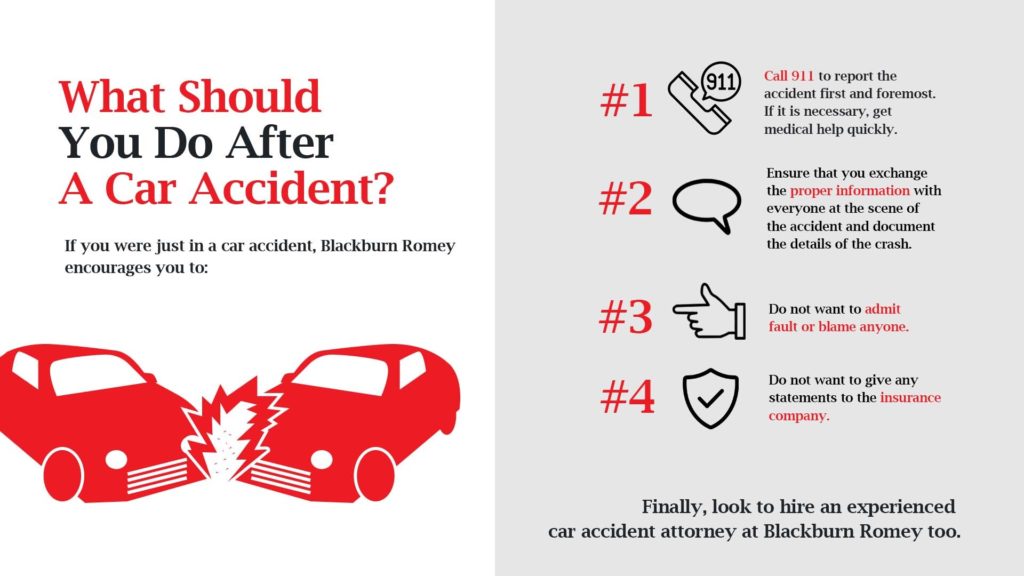
Recovering from a serious car accident often involves more than medical treatment, as financial uncertainty, ongoing communication with insurance representatives, and questions about fault or compensation may continue after injuries begin to heal. Working with an Evansville car accident lawyer helps injured individuals understand their rights under Indiana law, respond appropriately to insurer requests, and approach the claims process with a plan grounded in documented evidence. Early legal involvement helps preserve critical records, evaluate insurance coverage, and prevent mistakes that could affect long-term recovery.
At Blackburn Romey, we represent drivers and families throughout Evansville with careful preparation and consistent communication from the outset, reviewing medical documentation, explaining how comparative fault may apply, and outlining what to expect at each stage of a claim. If you have received calls from an insurance adjuster, have concerns about liability or settlement timing, or want clarity about your options, contact our office at 833-FOR-HELP to speak with our team and discuss your situation.
Decades of handling truck accident cases in Indiana have equipped Blackburn Romey with the expertise to challenge insurance companies effectively. We start fighting for your compensation from day one, making sure no piece of evidence is overlooked.❞ Act now! Contact Chris Blackburn today, and let us work for you.

Chris Blackburn


What Our Clients Are Saying About Us

After I suffered a devastating car accident with an uninsured driver, Blackburn Romey took the time to listen to my fears, concerns, and situation. I had physical and emotional damage to work through before I was comfortable getting behind the wheel of a car again. They worked with my insurance and the state to get me all the help I needed and took care of all the paperwork so I could concentrate on getting better. I got a wonderful settlement and am back to living a normal life. They showed that they really cared, and while no one wants to be in that type of situation, they proved to be a positive asset to get through it.
Personal Injury & Wrongful Death is all we do
Get In Touch With Us
There are two ways to settle your injury car accident claim. You can either resolve it through settlement negotiations or court litigation. Depending on which path you take, your timeline will vary. Every case timeline will vary, but most cases take a year to resolve. A settlement process often takes one to three months to resolve and usually involves negotiating with the insurance company using evidence.
The lawsuit process is more exhaustive and includes the following steps:
The case may be resolved at any moment during negotiations. As you might imagine, all of these steps can extend your timeline. Your Indiana car accident attorney will work to resolve the case as quickly as possible for a fair amount.
There is a two-year window where accident victims can file car accident lawsuits. However, the insurance company will have stricter deadlines, usually within a week. The insurance wants you to report your accident within their timeframe so they can investigate and determine your outcome. You can risk a case dismissal if you wait until after this period to take action. There are some exceptions pertaining to minors or when there is a delay in identifying the injuries.
For minors, the two-year deadline begins when they turn 18. Another exception would include when a person is mentally or physically disabled, such as in a coma. Once the individual is no longer legally disabled, the timeline for their claim begins. Another exception is if the individual dies during the two years. The timeline is then extended eighteen months from the death date.
Hiring our firm requires no payment up front, and you will never pay fees unless we settle your case or secure a jury verdict. Then, payment comes from your settlement – never out of your own pocket.
Claim values vary widely based on a variety of factors, including (but not limited to), severity (and permanency) of the injuries, length of recovery, medical bills, the type of health insurance coverage you have, whether or not you are partially at fault for the accident, the quality of insurance covering the at-fault party, the county where the accident occurred, the identity of the at-fault party, among many others. As you can see, it is not a simple process to determine the value of your case, and sometimes it is not a quick process either. Some of these things take time to develop. We would need to assess your situation and losses to advise you on the possible value of your case.
Four general elements of negligence must be proven, whether a case is from a car accident, a dog attack, workplace injury, or other personal injury matters. The four elements of negligence are:
Personal injury law is designed to hold negligent parties accountable for the harm they cause. However, an injury victim must present evidence to prove negligence to obtain compensation.
In most circumstances, the Indiana Statute of Limitations to file a personal injury claim is two years from the date of injury. There are possible exceptions to the general Indiana statute of limitations, which can extend the amount of time to file a claim. The statute of limitations might be extended based on age, disability, incapacity, or other compound circumstances.
Blackburn Romey founding partner Tom Blackburn graduated with honors receiving a degree from Indiana University at the Robert H. McKinney School of Law. Initiating his legal career in 1977, he has been active in practicing law and currently serves as a member of the Indiana State Bar Association on the Ethics and Advertising Committees, the American Bar Association, the American Association for Justice, as a board member at the Indiana Trial Lawyers Association, and as an appointed member of the Executive Committee for the State of Indiana for the National Trial Lawyers Association.

This page has been written, edited, and reviewed by a team of legal writers following our comprehensive editorial guidelines. This page was approved by Founding Partner, Tom Blackburn, who has more than 47 years of legal experience, including over 39 years specializing as a personal injury attorney.

