Blackburn Romey works with injured riders across Indiana who often ask the same question after a crash: does motorcycle gear reduce injury severity? The answer, supported by decades of federal safety research, is yes. Gear cannot stop a crash from happening, but it changes what a rider’s body goes through once impact occurs. Proper motorcycle gear serves as a rider’s primary physical defense against road hazards, and while it cannot prevent every injury, safety data consistently shows it lowers hospitalization rates and reduces life-threatening harm compared to riding without it. For riders navigating Indiana roads, understanding how gear works and why its absence raises the stakes matters for physical safety and for any injury claim that follows.
Contact a Motorcycle Accident Lawyer Near You
Motorcycles offer no frame, airbags, or crumple zones to absorb impact energy. When a crash occurs, a rider’s body meets the pavement or another vehicle directly, and the outcome often depends on what stood between skin and asphalt in that instant. Protective gear is built to absorb, redirect, or block that force before it reaches the rider.
A helmet cushions the skull against the force of a direct impact. Gloves protect hands that instinctively brace during a fall. Boots stabilize ankles and shield feet from crush injuries. Riders who wear this gear are simply better protected if a crash happens.
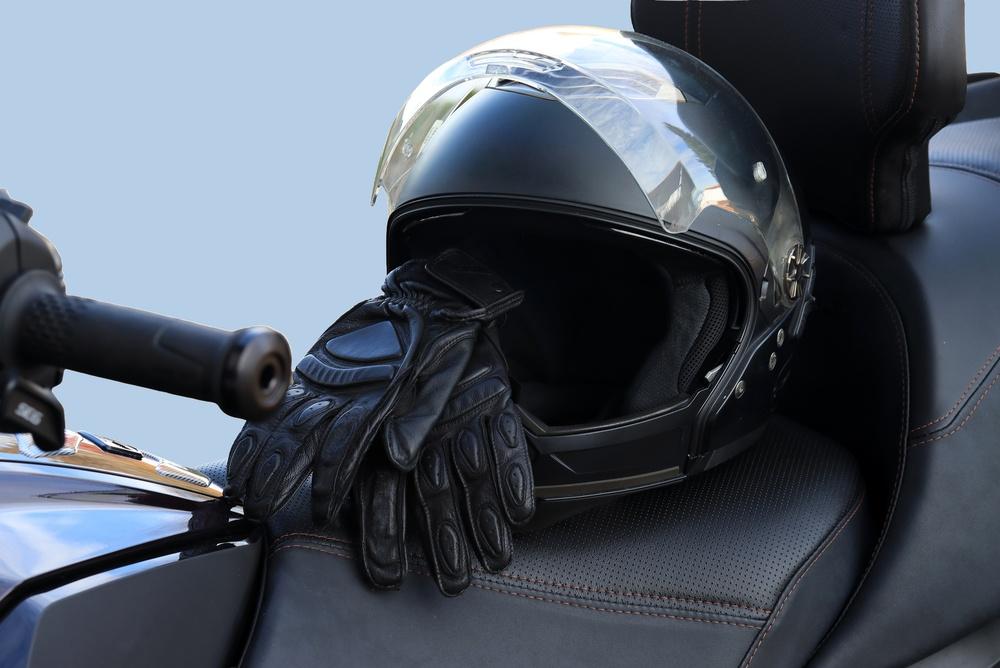
Full protective gear covers the body from head to foot, and each piece is built for a different point of impact.
Helmets remain the single most important piece of equipment a rider can wear. A properly fitted, DOT-compliant helmet absorbs impact energy that would otherwise transfer directly to the skull and brain, lowering the risk of traumatic brain injury.
Armored jackets and riding pants use reinforced padding at the shoulders, elbows, hips, and knees, along with tough materials that resist tearing and limit road rash when a rider slides across pavement. Road rash can sound minor, but severe cases require skin grafts and extended wound care.
Gloves protect the hands, which absorb enormous force when a rider instinctively reaches out during a fall. Reinforced palms and knuckle protection reduce fractures and deep lacerations.
Boots stabilize the ankle joint and shield the feet from crush injuries, which commonly occur when a motorcycle tips over or is pinned against another vehicle in a crash.
Some riders also wear back protectors and chest plates, which guard the spine and torso, areas prone to some of the most severe injuries a rider can sustain.
Related reading: Passenger Rights After a Motorcycle Accident in Indiana
Riders who wear full gear tend to walk away from a crash with lighter injuries than those who do not, and the difference shows up clearly across a few common injury types.
Reducing the Risk of Head Injuries, Road Rash, and Fractures
Helmeted riders face a substantially lower risk of fatal head trauma than unhelmeted riders in comparable crashes, and that protection holds up even at lower speeds. A skull fracture or brain injury can result from an impact that seems minor, if nothing is there to absorb the blow.
Road rash, one of the most common motorcycle injuries, often depends heavily on what a rider was wearing. Riders in full protective clothing typically walk away with superficial abrasions where an unprotected rider might suffer deep tissue damage requiring surgery.
Fractures follow a similar pattern. Reinforced gloves, boots, and jacket padding spread out impact force instead of letting it concentrate on a single bone, lowering both the likelihood and severity of breaks in the hands, wrists, and lower extremities.
Please read: Why Summer Motorcycle Accidents Increase in Indiana
Federal data backs up what riders see firsthand on the road. According to the National Highway Traffic Safety Administration, helmets reduce motorcycle rider fatalities by 22 percent to 42 percent and lower the risk of brain injury by 41 percent to 69 percent. The same data found that 39 percent of motorcyclists killed in 2021 were not wearing a helmet at the time of the crash.
These numbers help to answer the question: Does motorcycle gear reduce injury severity? With straightforward data. For Indiana riders, gear is a documented factor in whether a crash is survivable and how severe the resulting injuries turn out to be, not a matter of personal style.
Gear choices can factor into how an injury claim is evaluated, separate from the question of who caused the crash. Under Indiana’s contributory fault statute, if an injured rider shares some responsibility for what happened, the compensation they can recover for their losses is reduced in proportion to their share of fault.
Insurers sometimes argue that a rider’s decision to forgo protective gear contributed to the severity of their injuries, even when another driver caused the crash itself. That argument does not erase a valid claim, but it can reduce the payout, which is why documenting gear worn at the time of a crash matters just as much as documenting the collision itself.
Important information about Motorcycle Rear-Ended: What to Do and Who May Be Liable and What Happens if a Teen Causes a Motorcycle Accident?
Indiana riders face daily hazards on highways and city streets, including distracted drivers, sudden lane changes, and left-turn collisions, all of which leave little time to react. Gear cannot stop a driver from making that mistake in the first place. But once impact happens, does motorcycle gear reduce injury severity? What a rider has on their body makes a real difference in what happens next. Blackburn Romey helps injured Indiana motorcyclists understand their rights and pursue the compensation available under the law after a serious crash. If you or someone you love has been hurt in a motorcycle accident, call 833-FOR-HELP to speak with our team about your situation.
Blackburn Romey founding partner Tom Blackburn graduated with honors receiving a degree from Indiana University at the Robert H. McKinney School of Law. Initiating his legal career in 1977, he has been active in practicing law and currently serves as a member of the Indiana State Bar Association on the Ethics and Advertising Committees, the American Bar Association, the American Association for Justice, as a board member at the Indiana Trial Lawyers Association, and as an appointed member of the Executive Committee for the State of Indiana for the National Trial Lawyers Association.

This page has been written, edited, and reviewed by a team of legal writers following our comprehensive editorial guidelines. This page was approved by Founding Partner, Tom Blackburn, who has more than 47 years of legal experience, including over 39 years specializing as a personal injury attorney.

